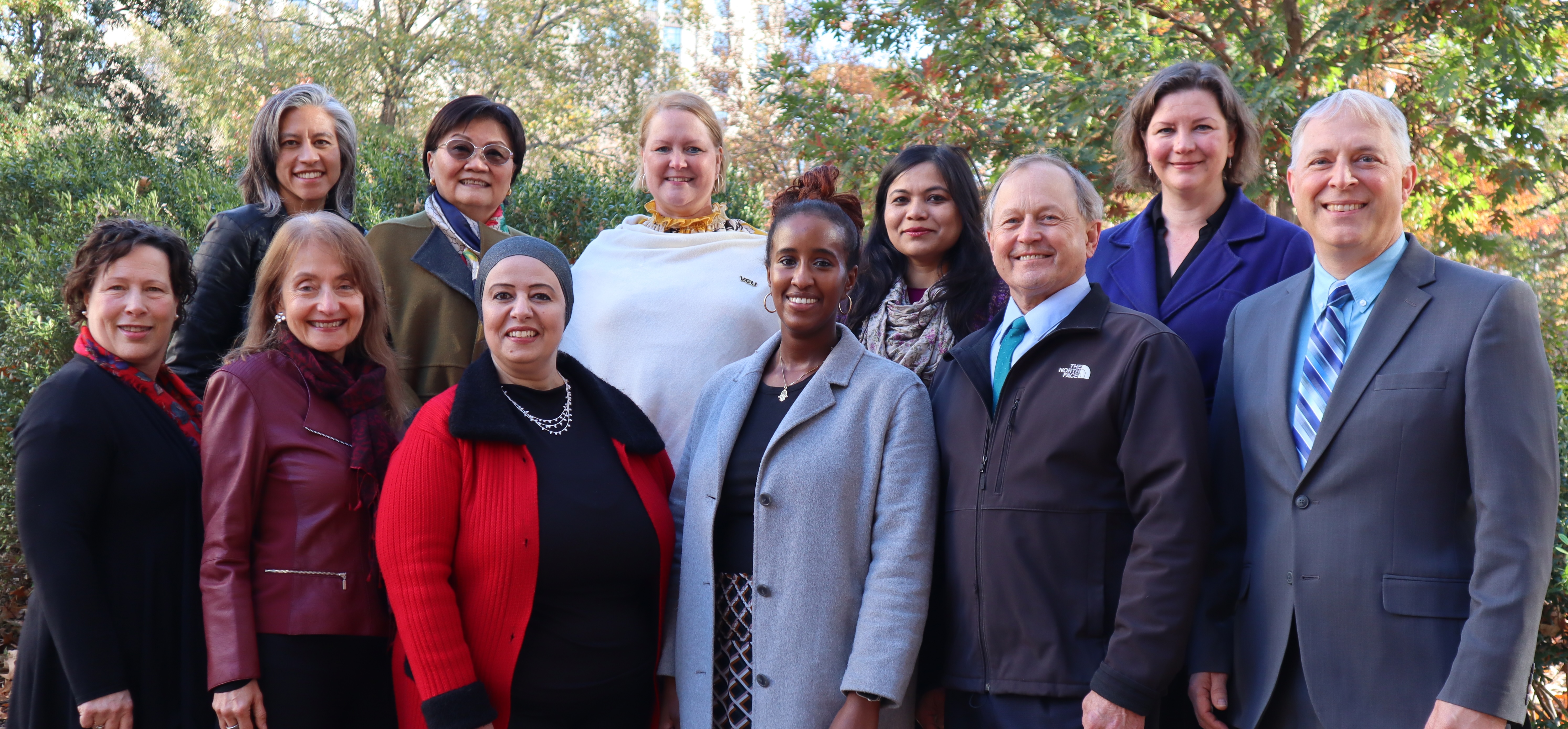
The Department of Epidemiology at VCU conducts innovative, interdisciplinary research to understand health and disease across populations. Our faculty collaborate with VCU research centers, community partners, and global organizations to translate discoveries into actionable strategies that improve population health locally and worldwide. Students and postdoctoral fellows are integral to this work, contributing to research that addresses pressing public health challenges.
Our Research Programs
Genetic & Molecular Epidemiology
Faculty in this program investigate how genetic and environmental factors interact to influence mental health, chronic disease, cancer, and substance use.
Faculty in this program address health disparities, women’s health across the lifespan, gender-based violence, HIV/AIDS, and chronic disease prevention worldwide.
Twin studies on substance use and mental health outcomes across the life course
Use of genomic and social environmental data to resolve the comorbidity between mental health outcomes, substance use behaviors, and chronic medical conditions.
Translational studies linking genetic and environmental insights to clinical and community interventions.
Highlights: Collaborations with the Virginia Institute for Psychiatric and Behavioral Genetics, the VCU Cohort and Registry Administration Core, and the Community-engaged collaboratives of local non-profit and government stakeholders in Richmond; Global consortia of genetically-informed studies studying multiple mental and chronic health outcomes of substance use as well as aging (e.g., Interplay of Genes and Environment across Multiple Studies consortium).
Lifecourse research on women’s health, including reproductive factors, menopause transition, and midlife cardiovascular and cognitive outcomes.
Studies of hormonal, metabolic, and vascular changes in midlife women and their impact on healthy aging.
Research on alcohol use, violence, and infectious diseases with attention to gender-specific patterns globally.
Policy consultation with WHO and UNDP to integrate sex-, age-, and life-course-specific evidence into public health programs.
Development of international research centers and programs advancing both women’s health and global health.
Highlights: Collaborations with large cohort studies (e.g. SWAN, MESA), international network like SHE HEALS, and global health initiatives; faculty bring expertise in women’s health, aging, and reproductive factors, alongside access to extensive data repositories, manuscripts, and grant networks supporting global and chronic disease research.
Multi-cohort studies including SWAN, MESA, ERA-JUMP, and KEEPS.
Randomized trials and longitudinal studies on aging and heart health.
Translational research addressing prevention, treatment, and healthy aging.
Highlights: Expertise in longitudinal and randomized controlled studies; integration of lifestyle, genetic, and environmental data to inform interventions.